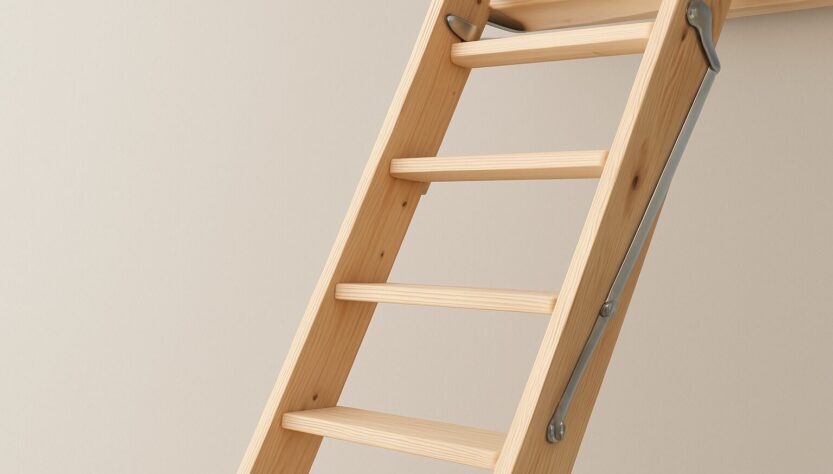
Sustainability has become a genuine purchasing criterion for many homeowners. When comparing loft ladder materials, the environmental picture is more nuanced than it first appears.
How Is a Loft Ladder’s Environmental Impact Measured?
The most widely used metric is embodied carbon—the total greenhouse gas emissions associated with a product’s extraction, manufacture, transport, and disposal. A secondary consideration is end-of-life recyclability.
Both aluminium and timber carry different environmental profiles across these categories.
The Environmental Case for Wood
Timber is a renewable resource. Responsibly sourced wood from certified forests (FSC or PEFC certification) sequesters carbon during growth—meaning the raw material actually removes CO₂ from the atmosphere before it becomes a product.
A wooden loft ladder manufactured from certified hardwood has a significantly lower embodied carbon footprint than its aluminium equivalent in most lifecycle assessments. Additionally, at end of life, untreated or minimally treated timber can be composted or used as biomass fuel.
Key stat: According to the Forestry Commission, one cubic meter of timber used in construction stores approximately 0.9 tonnes of CO₂ equivalent—carbon that remains locked in the product for its entire service life.
The Environmental Profile of Aluminium
Aluminium production is energy-intensive. Primary aluminium smelting is one of the most carbon-heavy industrial processes in the manufacturing sector, generating approximately 16.5kg of CO₂ per kilogram of aluminium produced (World Aluminium, 2022).
However, aluminium is infinitely recyclable without quality loss. Recycled aluminium requires just 5% of the energy needed to produce primary aluminium. A ladder manufactured from recycled content dramatically reduces its environmental impact.
Practical guidance: When purchasing aluminium, look for products that specify a high percentage of recycled content—ideally 70% or above.
How to Make a More Sustainable Choice
Choose certified wood: FSC or PEFC certification ensures the timber was sourced from responsibly managed forests.
Avoid tropical hardwoods without verified certification—these carry a higher risk of contributing to deforestation.
Specify recycled aluminium when selecting metal options.
Prioritize longevity: A product that lasts 25 years has a lower annual environmental impact than a cheaper product replaced after 10 years, regardless of material.
Frequently Asked Questions About Eco-Friendly Loft Ladders
Is reclaimed timber a viable option for loft ladders?
Reclaimed timber has excellent sustainability credentials but is rarely used in manufactured loft ladder products due to dimensional consistency requirements. Custom-built wooden loft ladders from reclaimed timber are possible but require specialist joinery.
Are there carbon offsetting programs associated with timber products?
Some certified timber suppliers participate in offset programs. However, choosing certified sustainably sourced wood is a more direct and verifiable environmental benefit than relying on offset credits.
Does the finish on a wooden ladder affect its recyclability?
Yes. Paint, varnish, and wood treatments complicate composting and biomass use at end of life. Water-based finishes are preferable to solvent-based products for both environmental and indoor air quality reasons.
Which material is better if I want to reduce my home’s overall carbon footprint?
Certified timber wins on embodied carbon at manufacture. Recycled aluminium narrows the gap considerably. If your primary concern is carbon impact, certified wood from a domestic or regional supply chain is the more verifiable choice.
Are there any standards for eco-friendly loft ladders?
There is no single eco-label specific to loft ladders. FSC or PEFC certification on timber components is the most reliable environmental credential available. General product certifications like the Nordic Swan Ecolabel may apply to some manufacturer ranges.
Sustainability Without Sacrifice
Choosing an environmentally responsible loft ladder does not require compromising on performance or safety. Certified timber and high-recycled-content aluminium both deliver products that meet safety standards, last for decades, and carry a meaningfully reduced environmental footprint.
The most sustainable loft ladder is ultimately the one you do not have to replace.